Search brought us readers already looking for an answer. Facebook was different.
Facebook was where our audience spent time whether or not they were searching for anything. For a project like Qysh Me, that made it the most important channel we had for reaching people before they even knew they needed us.
Growing the page took a few years and a clear idea of what we were doing there.
Share value, not links
Most brands treat the feed as a place to dump links back to their site. That is the mistake.
People do not open Facebook to be advertised at. They open it to be entertained, informed, or helped.
So we made each post useful or interesting on its own. Even for someone who never clicked through.
A quick tip that stood alone. A surprising fact. A practical answer to a common problem, right there in the post. The link to the full article was a bonus, not the point.
What worked for us
- Post consistently, so the audience learned to expect us and the algorithm kept showing us
- Lead with usefulness, giving people something worth their attention in the post itself
- Match the format to the feed, writing for how people actually scroll, not how they read an article
- Reply and engage, because a page that answers people builds loyalty a broadcast never will
- Watch what resonates, then make more of it and quietly drop what did not
Two things kept the rhythm sustainable. We scheduled through Buffer, so the page had a steady heartbeat even on days none of us could sit in the feed.
We also wrote fun articles, not only practical ones. Pieces people enjoyed enough to want to pass along. A how-to answers a question and ends there, but something funny or surprising gives the reader a reason to put it in front of their own friends. Those were the articles that did the traveling for us.
Nobody handed us a formula for any of this. We worked it out by testing, then testing again, then testing once more. Different post formats, different times of day, different lengths of caption, image versus link versus plain text. We would try a version, watch what the reach did, keep what worked and throw out what did not. Most of what we eventually treated as rules started as a guess that survived a few rounds of that.
And we learned the lightest posts often traveled furthest. A coffee-cup image telling people to tag the friend whose name starts with “K” would pull hundreds of comments. A serious article sat quiet.

The payoff was not only in our own numbers. Facebook was our single biggest source of traffic by a wide margin. More than half of everything.
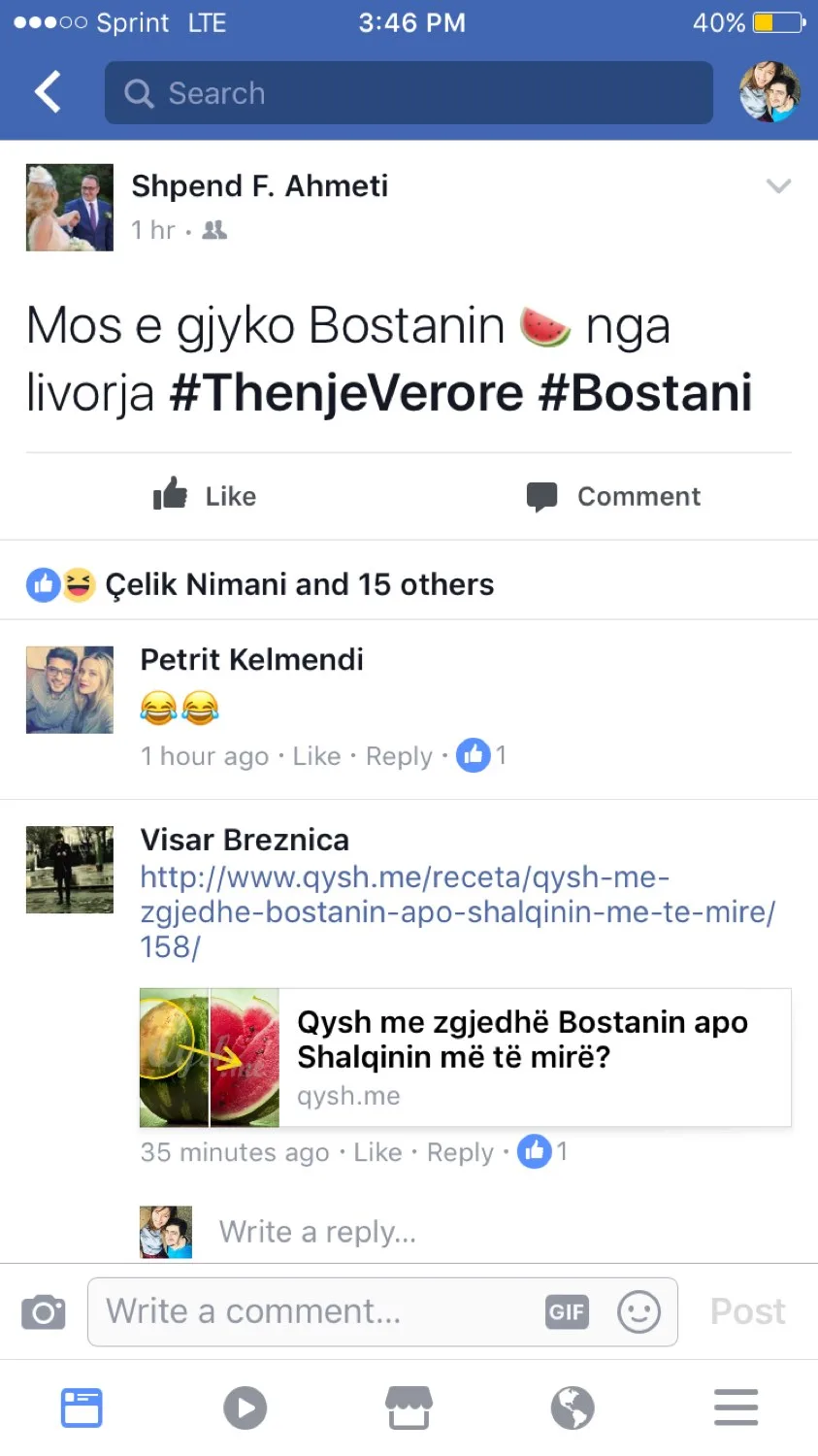
And when a piece was genuinely good, it escaped our page entirely. Our articles turned up in places we never put them. Shared into the comment threads under posts by well-known public figures. That is reach you cannot buy.
Compounding, not spikes
The growth was rarely dramatic. It was steady.
A consistent rhythm of genuinely useful posts slowly turned a small page into a real audience. One that trusted us and shared us with their friends.
That word-of-mouth, one person tagging another, was worth more than any single viral moment.
What I recommend
Treat your social page as a place to give, not to advertise. Show up consistently. Make each post worth someone’s time on its own. Actually talk to the people who reply.
On Qysh Me, patient, useful posting built an audience that became one of our biggest assets. And it set up the milestone I am proudest of from that era.
Write a comment